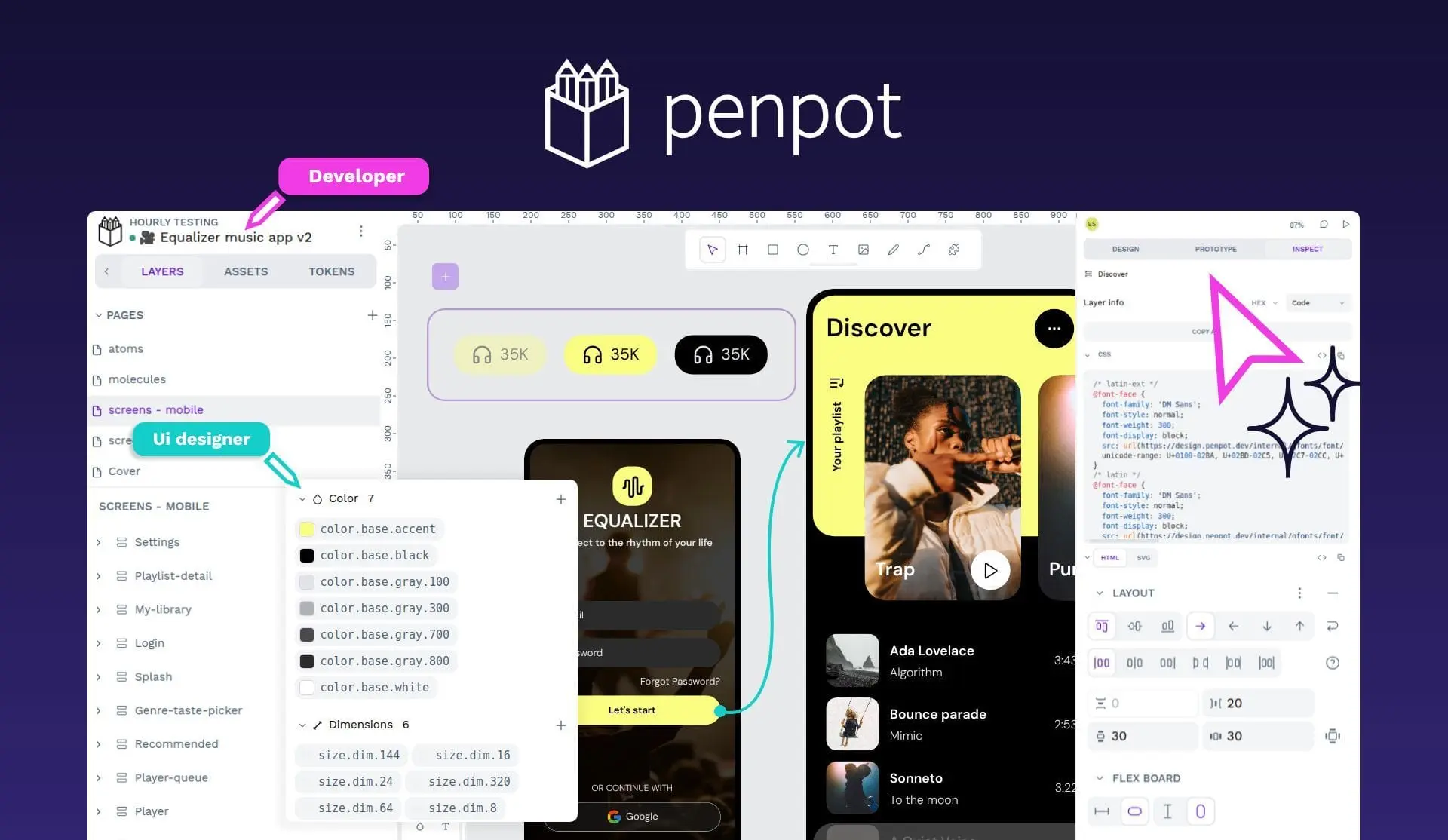
Transitioning your enterprise design system from proprietary software to open web standards is a strategic move toward data sovereignty, design-as-code workflows, and lower total cost of ownership. To help teams navigate this shift without breaking component logic or stalling active product pipelines, we’ve published a comprehensive, end-to-end migration guide.
While this resource focuses heavily on transitioning from Figma to Penpot, the core migration principles, token mapping strategies, and pilot execution blueprints apply to any enterprise design tool transition.
What You’ll Find Inside the Guide
-
The Core Enterprise Value Proposition: A breakdown of why enterprise teams are migrating—including native CSS layouts (Flexbox and CSS Grid), first-class Design Tokens, full digital sovereignty across Cloud and Self-Hosted deployments, and three-party collaboration between design, code, and AI.
-
Pre-Migration Readiness Audits: Step-by-step protocols for auditing critical project files, component dependency chains, design token usage, and unsupported plugins before starting your export.
-
File & Library Migration Mechanics: Tactical walkthroughs for using the Penpot Exporter Plugin for Figma (supporting
.figfiles,.deckslides, variables, variants, and slots) alongside direct static asset pipelines. -
Design Token & Variable Mapping: Standardizing native Figma Variables and Tokens Studio setups into open JSON structures that import natively into Penpot.
-
Validation & Sandbox Frameworks: Best practices for testing migration fidelity using low-stakes sandbox files (like the Codex Design System) and executing post-migration cleanup checklists.
-
Managing Dual-Ecosystem Cohabitation: How to manage parallel Figma/Penpot workflows during transition phases, avoid destructive plugin-based continuous syncs, and leverage programmatic API-to-API bridges like FigPot.
-
AI Workflows via Penpot MCP Server: How to use Penpot’s Model Context Protocol (MCP) server to automate file migration debt, clean up layout anomalies, and allow AI agents to query design files directly for code generation and token validation.
-
Tailored Role & Pilot Blueprints: Customized migration roadmaps for Frontend Developers, UX/UI Designers, DesignOps Leads, Design System Leads, and Product/Engineering Pilot Evaluators running net-new feature PoCs.
You can access the PDF online here: Migration guide.pdf - Nextcloud Kaleidos
Take a look through the guide, share it with your design and engineering leads, and let us know your thoughts or migration questions in the comments below!