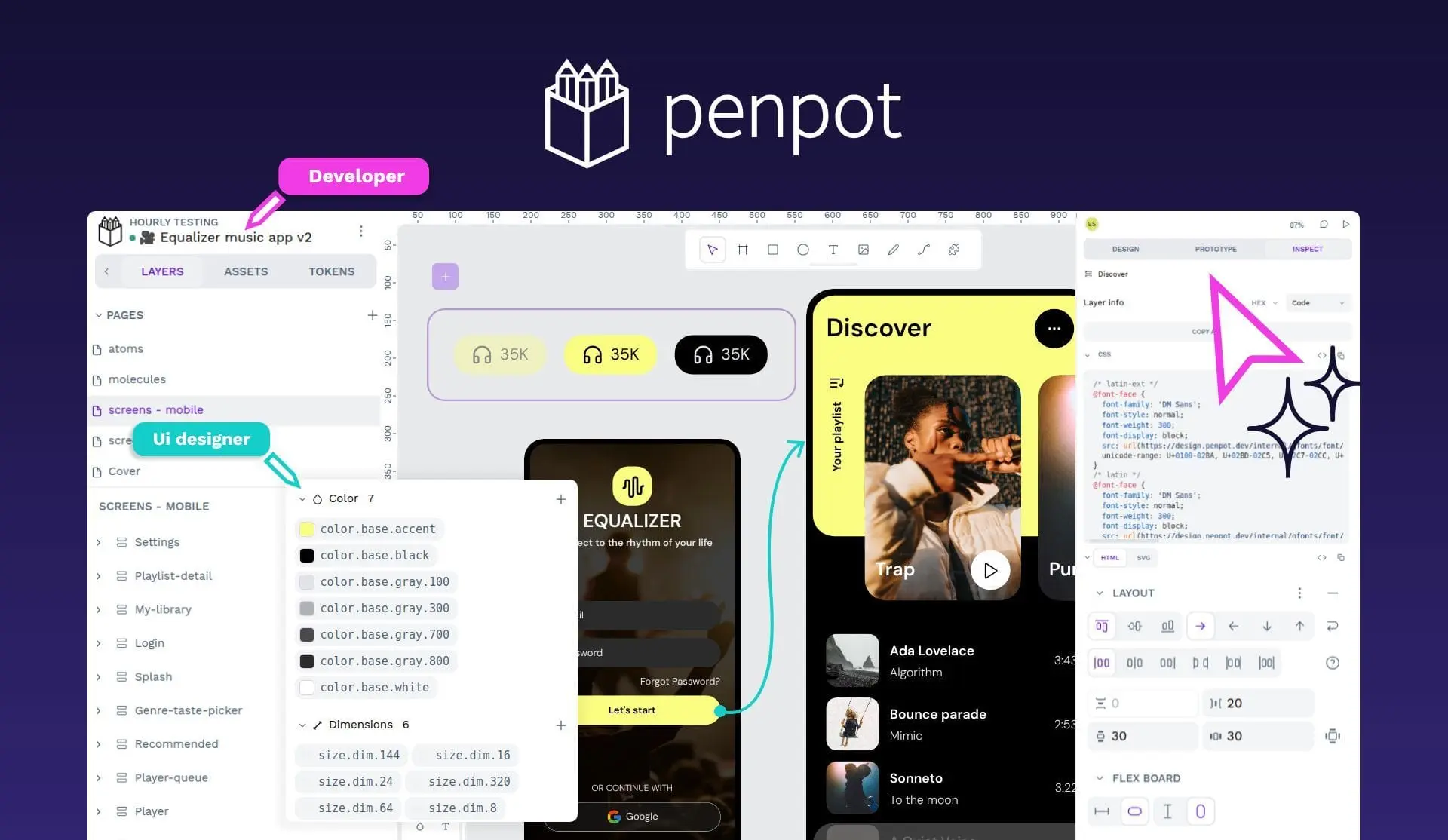
At the first Penpot community meetup held at Shenzhen University, I hosted a talk entitled “Blender + AI Era: Why Should You Know Penpot?” and shared reflections on how Penpot, Blender, and AI relate to open-source learning, workflow thinking, and community growth.
The session focused on introducing Penpot’s value, explaining open-source collaboration, and exploring how localized teaching and community support can help Penpot grow in China.
Things we learned
-
Penpot and Blender share a similar open-source logic.
Although they belong to different domains, both grow through strong communities, clear contribution mechanisms, and open ecosystems that encourage continuous improvement. -
Tools are part of a larger way of working.
Blender and Penpot show that tools are not isolated software products, but points of connection within a broader practice of making, collaboration, and design. -
AI is a catalyst, not a replacement for human thinking.
AI can speed up output, shorten timelines, open new directions, and reduce repetitive work, but people still create value by integrating tools, learning across systems, and combining knowledge with creativity. -
Workflow thinking matters more than ever.
As technology changes quickly, building a personal work system and continuously adapting it is essential. This includes staying open, learning across disciplines, and iterating how we work. -
T-shaped capabilities develop through practice.
Professional depth and interdisciplinary understanding are built gradually through real learning and application. -
Open-source tools need community understanding.
In the discussion around Penpot, it became clear that many people still underestimate the value of open-source. This is not only a product awareness issue, but also a mindset issue. -
Localized teaching materials are important for adoption.
Even when teaching resources exist, they are not always directly usable in class. Chinese-language materials and clearer explanations can make Penpot easier to teach and easier for students to engage with. -
The community response highlighted both curiosity and unfamiliarity.
There is interest in new tools and open workflows, but also a gap in familiarity. This showed that awareness-building, translation, and teaching context are all important for community growth.
Areas to improve
- Penpot is still relatively unknown in China.
More awareness-building is needed so people can better understand its value and its open-source model. - Open-source perception could be addressed more directly.
Some people still associate open-source with limitations or instability, so future sharing could spend more time clarifying this misunderstanding. - Localized teaching content needs further development.
Existing materials are helpful, but they are not always directly usable in teaching. More adapted Chinese examples and localized support would improve accessibility. - Penpot could be introduced more strongly within a broader workflow.
Teaching it alongside other open-source tools may help learners understand how it fits into real creative practice.
Notes for future viewers
- Start by understanding Penpot as more than a design tool.
It is also a way to think about open collaboration, open standards, and vendor-neutral workflows. - Compare Penpot with other open-source tools like Blender.
This helps reveal the shared values of community contribution, openness, and sustainable tool development. - Pay attention to workflow, not only features.
The most useful insight is how Penpot can connect with other tools and fit into a larger creative system. - Keep an eye on localization and teaching resources, and start with practical learning.
Accessible and context-aware materials can make a big difference. It is also helpful to begin with introductory Penpot content, then explore how Penpot can work together with AI tools and other open-source platforms in real projects.
Photos, videos, links
Full article about the event: click here
Related teaching materials or slides: 20260516 Penpot Seminar Slides and Certification Demo