As Penpot Ambassadors, we took part in the first edition of DevConf in Pavia, a conference bringing together developers, open-source contributors and the broader free software community.
Our talk “UX/UI design becomes open with Penpot” was part of a program featuring topics such as the Fediverse, LibreOffice, Linux and other projects built around openness, collaboration and digital freedom.
We built the talk around our own experience. We shared dndg’s journey towards finding a more open design tool, starting from a challenge we experience every day: within the same company, developers and designers often don’t enjoy the same level of freedom. While development has long embraced open standards, collaborative platforms and self-hosted tools, design is still largely dependent on proprietary ecosystems.
To make this contrast tangible, we invited the audience (made up almost entirely of developers) to imagine a familiar scenario turned upside down: what if your Git repositories were proprietary? What if you couldn’t freely choose where to host your code, collaborate with your team or fully own your work? It was revealing to see how quickly people reacted. That simple experiment helped them imagine the reality many designers face every day and sparked a conversation about the future of design in the open-source community.
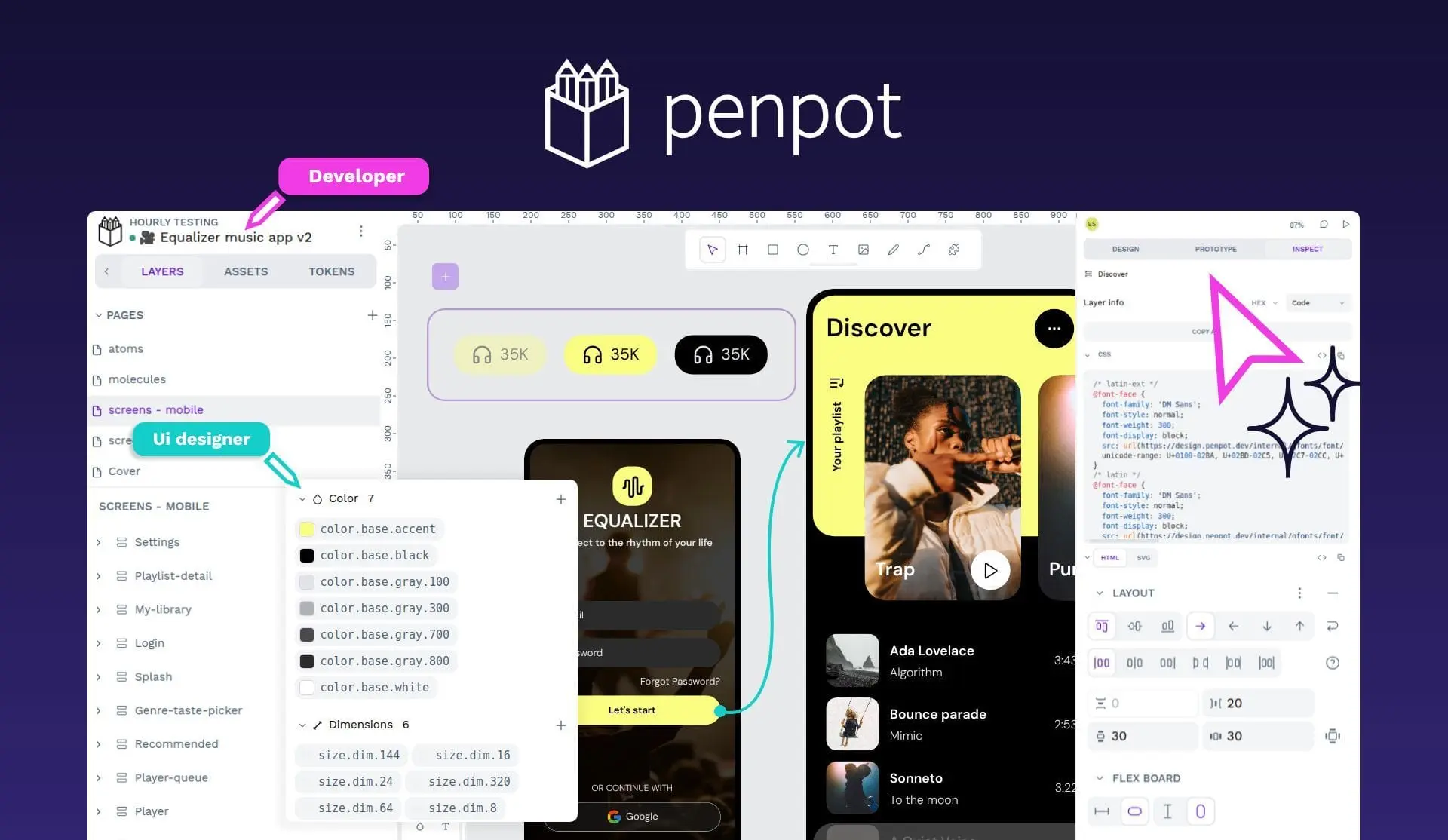
Penpot naturally became part of that story, as a concrete example of how design can begin embracing the same values that have shaped the open-source ecosystem for decades.
Things we learned
- Developers are curious about design
Design workflows are not something developers are often exposed to. We were pleasantly surprised by how engaged they were and how many questions emerged around the topic. - The experience was shared
Other attendees told us they had experienced the same frustrations with closed design tools and were already looking for more open alternatives. It was reassuring to discover that our journey wasn’t unique, but reflected a need felt by others in the community.
Areas to improve
- Bring more designers into these events
There were very few designers attending the conference. Bringing more design voices into open-source focused events would help broaden the conversation and build stronger connections between the two communities. - Lower the barrier to contributing design work in open source
Contributing design to open-source projects is still far from straightforward. There’s no established workflow (unlike code, where PRs, issues and review processes are well understood), tools are fragmented, and many projects don’t have a clear entry point for non-code contributions. Until this friction is reduced, it will remain difficult for developers and designers to communicate effectively and collaborate as equal contributors within these communities.
Notes for future viewers
- Start from shared values
Beginning the conversation with principles like openness, ownership, collaboration and digital sovereignty helped create an immediate connection with the audience, regardless of whether they already knew Penpot. - Connect design and open source
Design and open source are rarely discussed together. Creating opportunities for these communities to meet can generate surprisingly meaningful conversations. - Step outside your own discipline
As a designer, attending a two-day conference mostly focused on open-source software might have seemed outside my comfort zone. Instead, it exposed us to ideas, projects and discussions that can also influence how we think about design.
Photos, videos, links